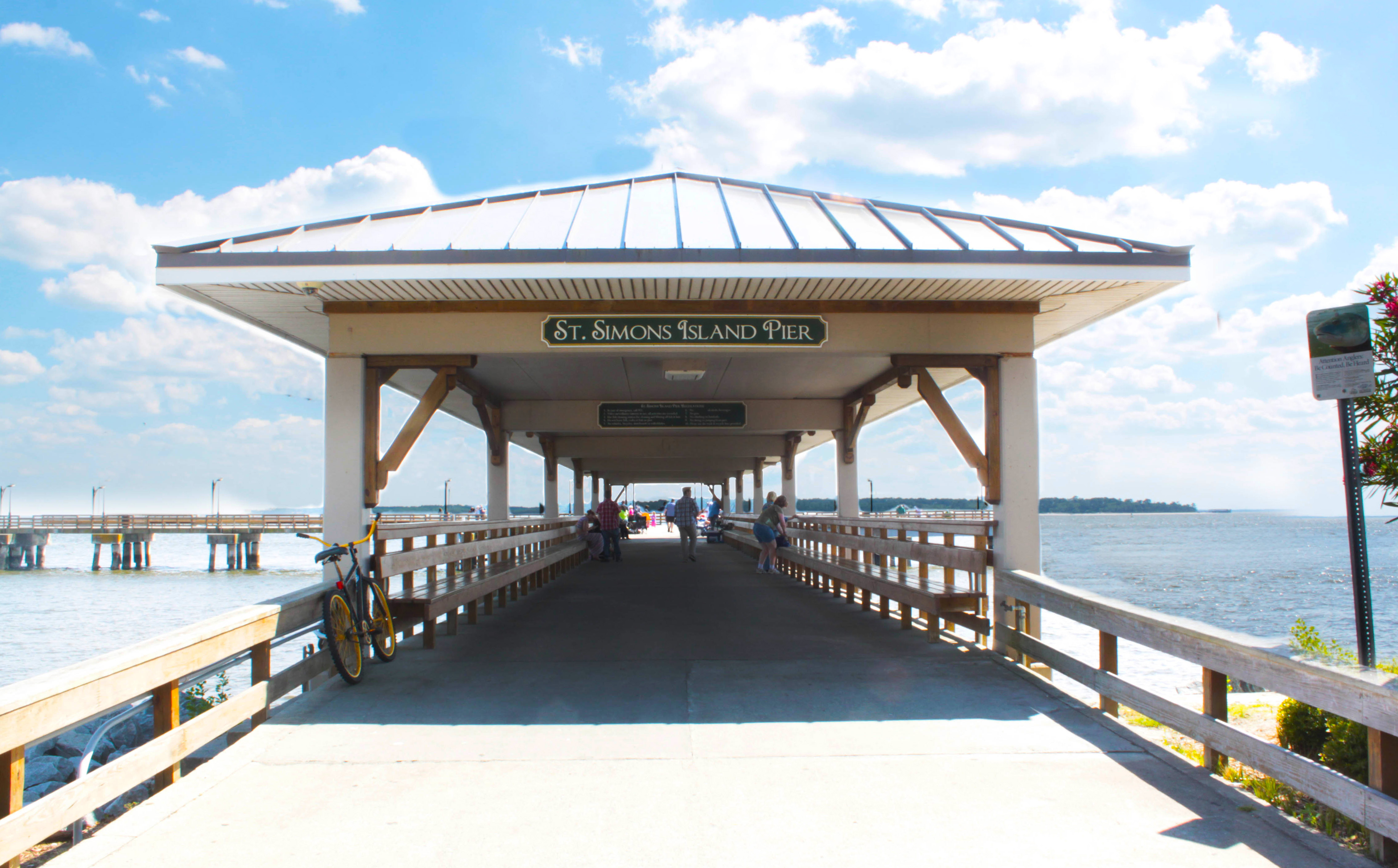
St. Simons Island is just heavenly.
It has beautiful beaches, a perfect climate and miraculous nature, all on one tiny island. With all of these glorious assets, one could think it is named after a Saint named Simon. But is it? The answer is no. It comes from a rich cultural tapestry woven over thousands of years. Archaeological evidence suggests human activity on St. Simons dates back millennia. Pottery shards over 4,500 years old have been found on nearby Sapelo Island. This indicates that Native Americans utilized St. Simons’ fertile hunting grounds and waters just as they did other Georgia barrier islands.

Originally named Guadalquini by the Mocama Indians, the Island was a hub of activity when Europeans arrived in the 1500s. The Mocama were a Native American group from northern Florida and southeastern Georgia. Their territory stretched from the Altamaha River in Georgia to south of the St. John’s River’s mouth, encompassing the Sea Islands, inland waterways, the Intracoastal, and much of modern-day Jacksonville. The Spanish named the entire area the Mocama Province and integrated it into their mission system. The Spanish missionaries took over and established San Buenaventura de Guadalquini on the southern end in 1605, continuing until 1684. Meanwhile, the northern end housed the Santo Domingo de Asao/Talaje mission from 1661 to 1684.
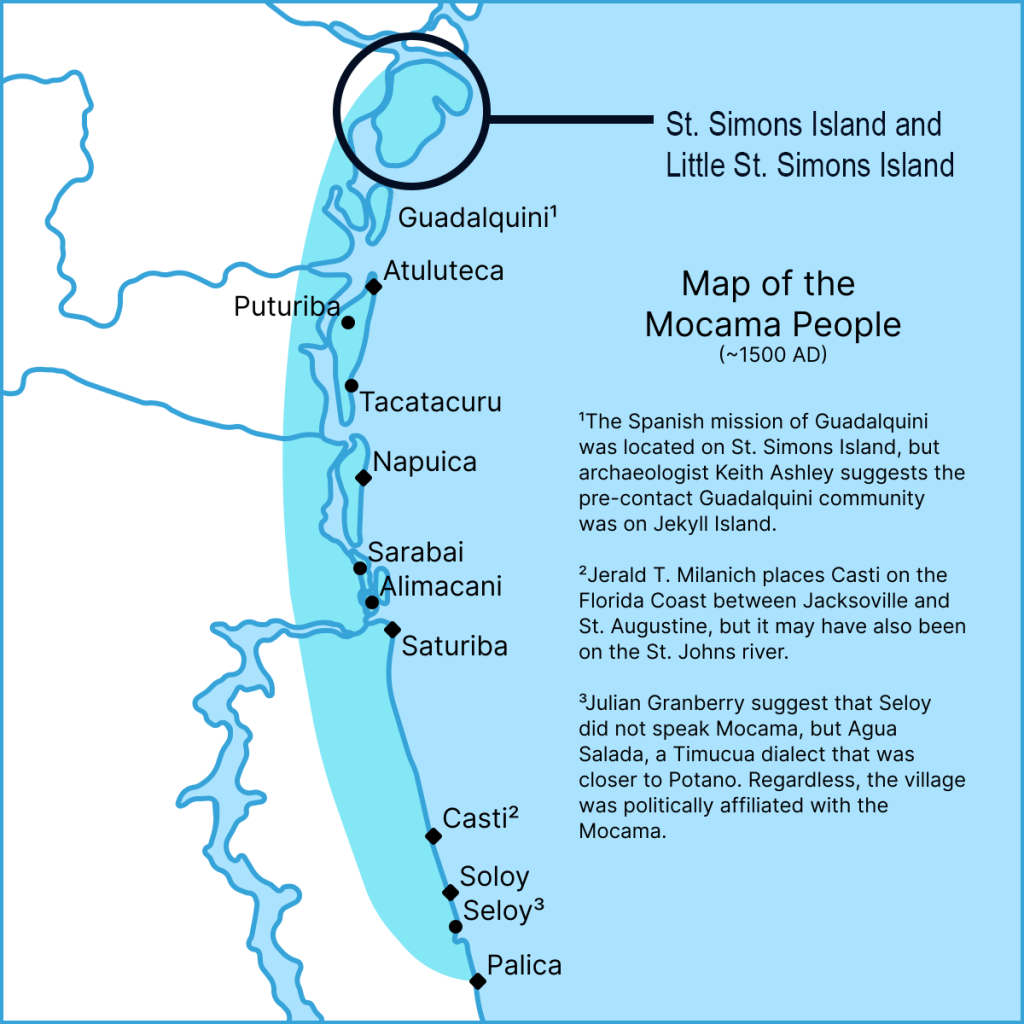
The Island’s name evolved from a Yamassee Indian village called San Simon.
The village existed near present-day Fort Frederica. between the late 1660s and 1684. English settlers later anglicized it to St. Simons.
Thus, St. Simons Island is more than just a picturesque destination; it is a place steeped in cultural and historical significance, reflective of the diverse peoples who have called it home across the centuries.